

PhD Students: Where are they now?
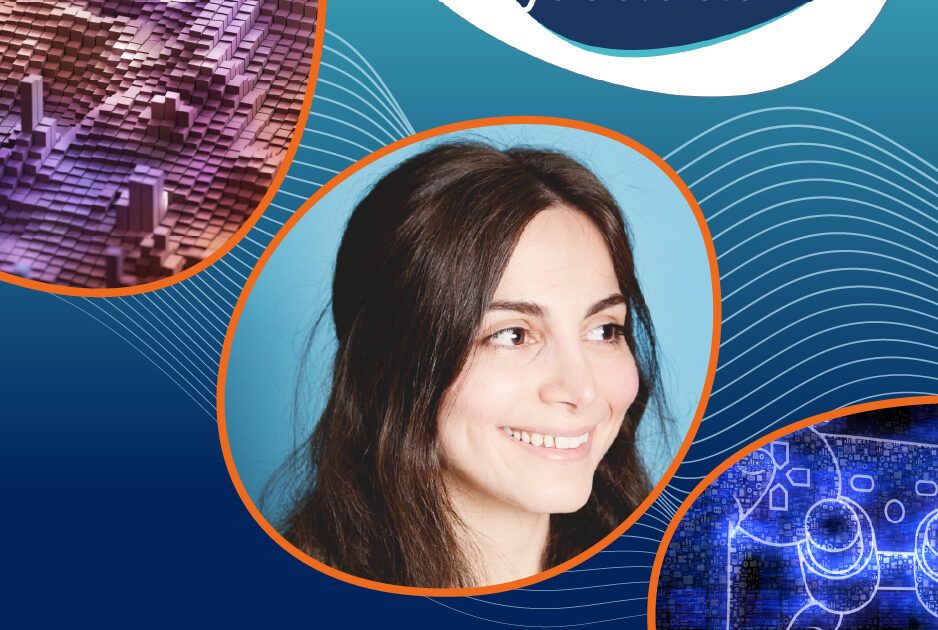
Dr Rojin Vishkaie
Dr Rojin Vishkaie is a researcher with over 15 years of experience spanning academia and industry. She holds a PhD in Computational Design with a specialization in Human–Computer Interaction (HCI).
Her work currently focuses on developer experience across AI, gaming, graphics, and high-performance computing.
She leads cross-functional research and design initiatives that translate rigorous behavioral research into actionable strategies, bridging complex technical systems and the developer community to enable intuitive, high-impact solutions.
Read about Dr Vishkaie’s professional journey and discover the pathways from PhD to academia and beyond.
1. What was your research topic, and what inspired you to pursue it?
My doctoral research sat at the intersection of Computational Design and HCI, with a focus on how people learn, create, and express emotion through emerging interactive technologies. I was particularly interested in immersive systems and how computational tools shape cognition, creativity, and engagement.
The inspiration came from practice. Before and during my PhD, I had exposure to both design and technical environments, and I repeatedly saw a gap between how systems were engineered and how humans actually experienced them. I wanted to study that gap rigorously, using empirical methods, while still grounding the work in real-world design problems. A PhD allowed me to ask deeper questions about why certain technologies succeed or fail for people, not just how to build them.
2. How did your supervisor support you, and do you have any advice for choosing the right supervisor?
My supervisor supported me by giving me both intellectual freedom and high expectations. I was encouraged to explore interdisciplinary questions while being held to a strong standard of methodological rigor and scholarly contribution. That balance was essential to my growth.
When choosing a supervisor, my advice is to look beyond prestige or topic alignment alone. Ask yourself:
- Do they support independence and critical thinking?
- Do they have a track record of mentoring students into diverse career paths?
- Do their communication style and values align with how you work.
A PhD is a long, demanding journey. The quality of the supervisory relationship often matters more than the exact topic you start with.
3. What was your journey like after completing your PhD?
My post-PhD journey was intentionally non-linear. I moved between postdoctoral research, academic faculty roles, and industry research positions, often at the boundaries of design, engineering, and behavioral science.
Rather than seeing these transitions as pivots, I treated them as extensions of the same core skill set: understanding complex systems through human-centered inquiry. Over time, I became increasingly focused on translating research into impact, whether shaping products, informing strategy, or mentoring teams. This flexibility allowed me to build a career that spans research depth and practical influence.
4. What skills from your PhD do you still use today?
I use PhD-trained skills every day, including:
- Problem framing in ambiguous spaces
- Designing rigorous qualitative and quantitative studies
- Critical analysis and synthesis of complex information
- Communicating evidence to technical and non-technical audiences
- Working independently while collaborating across disciplines
Perhaps most importantly, a PhD teaches you how to learn continuously, how to enter a new domain, ask the right questions, and build understanding from first principles.
5. How has your PhD shaped your career path or influenced where you are today?
My PhD fundamentally shaped how I think. It trained me to be comfortable with uncertainty, to challenge assumptions, and to connect theory with practice. Those skills enabled me to work across academia and industry, and to operate effectively at senior levels where problems are rarely well-defined.
The doctorate did not lock me into a single path; instead, it gave me the credibility and confidence to move across domains while staying grounded in research integrity.
6. What are you hoping to achieve in the future?
Looking ahead, I hope to continue shaping how advanced technologies are designed for and adopted by people. I am especially interested in influencing systems that scale: tools, platforms, and infrastructures that quietly shape how innovation happens.
Equally important to me is mentorship. I want to support early-career researchers and designers in navigating interdisciplinary careers, helping them see that there are many valid and impactful paths beyond traditional academic trajectories.


Leave a Reply